UK Online Retail Sales Report summary
July 2026
Period covered: Period covered: 31 May – 04 July 2026
3 minute read
Note: This report summary is one or two months behind the current month as standard reporting practice. The content is indicative only and incomplete with certain data undisclosed. Become a member to access this data or take out a free 30 day membership trial now.
Online performance
Online retail sales rose by xx% year-on-year in June, an acceleration from the xx% increase recorded in the same month last year.
June’s performance was supported by record temperatures, reduced high street footfall and highly purposeful shopping.
Promotional activity also played a central role in performance, with retailers using discounts to convert demand.
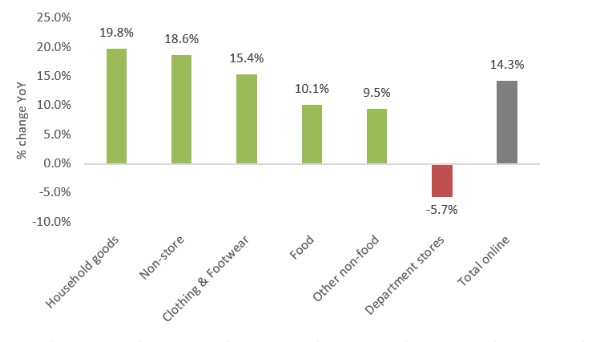
Sales increased in almost all categories, with household goods outperforming, helped by weather-related demand, while clothing and footwear’s double-digit growth was driven by widespread promotions.
Key drivers
As temperatures climbed, demand increased for fans, portable cooling products, lighter clothing and household items suited to hot conditions.
Online channels gave consumers immediate access to a wider pool of inventory, which became valuable when individual stores ran short of in-demand products.
High streets experienced weaker visitor numbers during the hottest periods of the month, with many shoppers choosing to stay at home or travel for leisure. This diverted a share of spending towards websites and apps, especially where the purchase was already planned.
The World Cup also created pockets of demand across digital channels. Products linked to home viewing, entertaining and summer gatherings were well suited to online ordering, particularly when consumers were buying around specific match dates.
While the tournament did not generate an equal lift across retail, it gave some retailers a useful occasion around to promote televisions, food, drinks and related household purchases.
Macroeconomic backdrop
Some of the pressure on everyday budgets was reduced in June giving households more room to spend across retail categories. Headline inflation eased to xx%, below expectations, as grocery inflation slowed and fuel prices fell.
The Bank of England kept Bank Rate at xx%, leaving borrowing costs elevated for households with mortgages, credit balances or plans to finance larger purchases.
That continued to weigh on categories where online sales often depend on higher value transactions, including furniture, large electricals and home improvement.
Housing activity also remained subdued, with mortgage approvals falling to their lowest level since December 2023.
The increase in the energy price cap from 1st July will place renewed pressure on some household finances, with higher utility bills narrowing the spending headroom created by lower inflation and cheaper fuel.
Take out a FREE 30 day membership trial to read the full report.
Proportion of online retail sales by category (Period aligned to ONS trading calendar – 31 May – 04 July 2026 )
 Source: ONS, Retail Economics analysis