UK Clothing & Footwear Sector Report summary
September 2026
Period covered: Period covered 02 August – 29 August 2026
3 minute read
Note: This report summary is one or two months behind the current month as standard reporting practice. The content is indicative only and incomplete with certain data undisclosed. Become a member to access this data or take out a free 30-day membership trial now.
Clothing & Footwear Sales
Clothing sales increased by xx% year-on-year in August, maintaining growth but slowing considerably from xx% in July and xx% in June.
Footwear remained considerably weaker, with sales declining by xx% year-on-year after falling xx in July. This was an improvement on the previous month but represented a sharp reversal from the xx% growth recorded in August 2025.
Footwear was the only category in our retail data to remain in decline during August, widening the difference between its performance and clothing.
August brought another spell of exceptional heat after a summer in which warm weather had arrived unusually early. Temperatures reached 38.1°C at Kew Gardens during the mid-month heatwave, but by then consumers had already experienced several months of summer conditions.
Clothing sales had risen xx% in May, xx% in June and xx% in July, giving households ample opportunity to purchase summer wardrobes before August began.
That helps supports the reason why another period of very high temperatures did not produce the same uplift seen earlier in the season.
The trading calendar was also quieter than earlier in the summer. The World Cup and Wimbledon had provided occasions around which spending could build in June and July, whereas August had fewer major events of comparable scale.
Back-to-school became more important during the second half of the month, providing a more conventional source of seasonal demand as attention began to move towards September.
The economic picture was becoming less favourable at the same time. CPI inflation rose to xx% in August; regular wage growth slowed to xx% and another increase in household energy bills was confirmed for October.
Clothing and footwear compete directly for discretionary income, making the gradual erosion of real income growth increasingly relevant.
Macroeconomic backdrop
The pressure on household finances increased during August as CPI inflation reached xx%, up from xx% in July and xx% in June. Regular wage growth slowed to xx%, leaving earnings only slightly ahead of inflation and reducing the real income gains that had provided households with greater spending power earlier in the year.
Energy costs will place further pressure on budgets from October, with Ofgem confirming a xx% increase in the price cap to £xx a year for a typical dual-fuel household. Electricity, gas and other household fuels were already xx% more expensive than a year earlier in August, leaving consumers facing higher essential expenditure as colder weather arrives.
Borrowing costs also remain elevated. The Bank of England held Bank Rate at xx% in September. The effective rate on newly drawn mortgages increased to xx% in July, adding to the financial pressure facing households refinancing or moving home.
Labour market conditions have weakened alongside the rise in inflation. Payrolled employment fell by an estimated xx in August and xx over the year, while vacancies declined to xx, their lowest level since 2021.
Consumer confidence offered a more positive signal, increasing three points to -14 in August, its highest level in two years. Expectations for personal finances improved as well, but clothing growth slowed for a third consecutive month and footwear remained in decline.
GDP increased xx% in July after growth of xx% in June, driven primarily by services. Economic activity was therefore still expanding as the third quarter began, but rising inflation, slower wage growth and higher household costs mean the financial position facing consumers has become tighter just as fashion moves into its autumn selling period.
Take out a FREE 30 day membership trial to read the full report.
Inflation is set to rise further
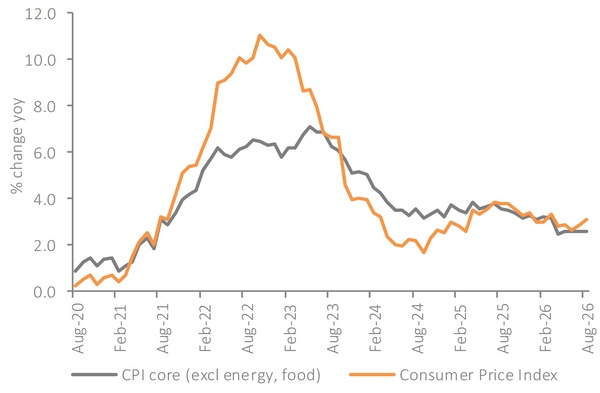 Source: Retail Economics analysis , ONS