UK Clothing & Footwear Sector Report summary
July 2026
Period covered: Period covered: 31 May – 04 July 2026
3 minute read
Note: This report summary is one or two months behind the current month as standard reporting practice. The content is indicative only and incomplete with certain data undisclosed. Become a member to access this data or take out a free 30-day membership trial now.
Clothing & Footwear Sales
Clothing sales rose by xx% year-on-year in June, compared with growth of xx% across footwear.
June’s exceptionally warm weather kept summer ranges relevant throughout the month and extended the period in which consumers had a practical reason to buy clothing.
Key drivers
Sustained high temperatures provided clothing retailers with a longer selling window for summer ranges following the favourable weather seen in May, reducing the usual risk of demand fading before seasonal stock had cleared.
Consumers remained engaged with clothing throughout June, and retailers were able to maintain sales across ranges suited to warmer conditions.
Promotional activity remained an important part of the market as retailers moved further into the summer trading period, particularly online, where clothing and footwear sales increased strongly. Promotions supported conversion among consumers who were already considering a purchase.
Digital channels captured a substantial share of that demand, with online clothing and footwear sales rising by xx% year-on-year during June.
This was much stronger than the overall category performance and indicates that consumers increasingly used online channels to compare products, prices and availability before committing to a purchase, particularly during periods when high temperatures reduced the appeal of spending time in physical shopping locations.
Macro backdrop
Some of the pressure on everyday budgets was reduced in June giving households more room to spend across retail categories. The economic position helped maintain participation in the market without removing the need for retailers to compete hard for each purchase.
Headline inflation eased to xx%, below expectations, as grocery inflation slowed and fuel prices fell.
The Bank of England kept Bank Rate at xx%, leaving borrowing costs elevated for households with mortgages, credit balances or plans to finance larger purchases.
That continued to weigh on categories where online sales often depend on higher value transactions, including furniture, large electricals and home improvement.
Housing activity also remained subdued, with mortgage approvals falling to their lowest level since December 2023.
The increase in the energy price cap from 1st July will place renewed pressure on some household finances, with higher utility bills narrowing the spending headroom created by lower inflation and cheaper fuel.
Latest trading updates
There has been a busy run of results across the clothing and footwear sector, with a mixed picture emerging. H&M and Fast Retailing reported stronger profits, while Burberry and Mulberry showed signs of improving momentum.
Primark and Frasers continued to benefit from international growth, despite weaker trading in parts of the UK market, and Sosandar returned to underlying profitability. Full analysis of the latest results is included in the Latest Developments section.
Take out a FREE 30 day membership trial to read the full report.
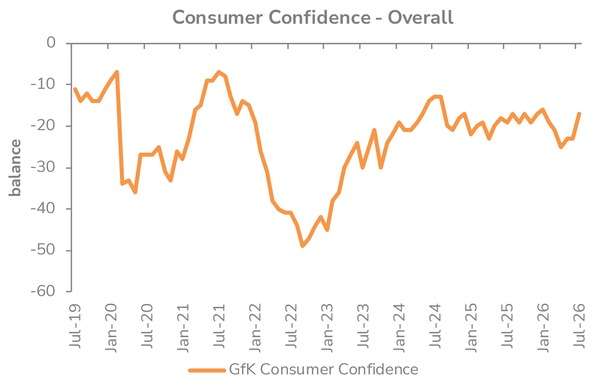
Consumer confidence stable
 Source: Retail Economics analysis, GFK